Art History with Alder
7 minutes
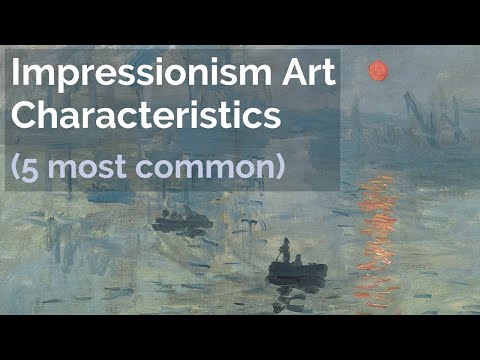
Impressionism is defined as an art-historical movement identifiable by five formal characteristics: quick, loose, unblended brushwork; bright, non-earth-tone hues applied to a light-primed ground without color blending; en plein air (outdoor, on-scene) execution; the use of non-local color (depicting an object's perceived color under transient light/atmospheric conditions rather than its conventionally attributed color); and a composition whose legibility is resolution-dependent, appearing chaotic at close viewing distance and coherent at a distance. The movement is situated as a reaction against the preceding Realist and Baroque traditions, which favored dark, primed grounds and naturalistic local color, and its stylistic markers function as a taxonomy for identifying works within the broader discipline of art history.