AJSesinando
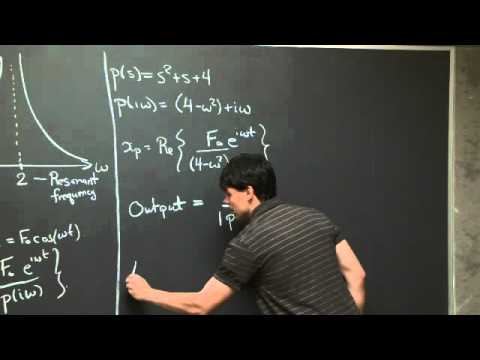
The Amplitude Response Function quantifies the steady-state oscillatory magnitude of a linear time-invariant system subjected to harmonic external forcing when dissipative forces (damping) are present. It is defined mathematically as the ratio of the output amplitude to input force amplitude, dependent on normalized frequency and damping ratios within the domain of classical mechanics and vibrations. This theoretical construct serves as a fundamental descriptor for resonance phenomena in damped systems, distinguishing itself from undamped response functions by incorporating energy dissipation into the system's transfer characteristics.