nanolearning
14 minutes
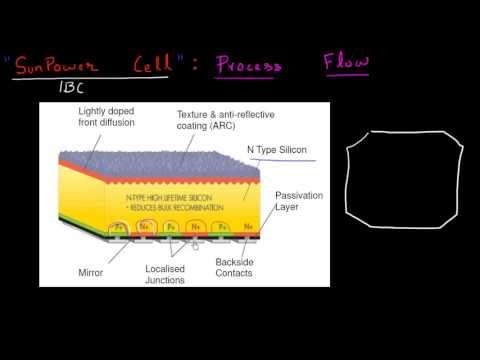
Back-contact solar cells put every metal contact on the rear, so the front has no silver lines. The positive and negative regions sit side by side on the back. They form interlocking fingers, like two combs pushed together. This is often called an interdigitated pattern. With nothing on the front, no light is blocked, so the cell makes more current. It also looks uniformly black, which many homeowners like on a roof. The rear layers are usually built like TOPCon or heterojunction contacts. The hard part is patterning. The factory must lay down p-type and n-type stripes next to each other without them touching. Older routes used printed masks and several rounds of wet etching. Each round adds acid or alkali baths, rinse water and fluoride waste. Newer lines use lasers to open or remove layers, which cuts chemical use. More steps still mean more energy and more chances to scrap a wafer. Alignment must be precise, or the stripes short. The payoff is the highest efficiency of any mass-made silicon cell. More power from the same glass, frame and silicon lowers the footprint per watt. The metal on the back can also be wider without shading, so some designs use copper. After this Concept you can explain why an all-black panel has no front lines and weigh the patterning cost against its extra power.