Alexandre HORY
52 minutes
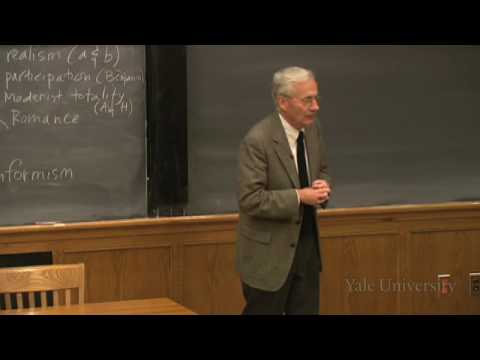
Marxist literary theory identifies four principal aesthetic options for how art should relate to ideology and social critique: realism (Marx, Engels, Lukács), the participatory aesthetic (Benjamin), the modernist aesthetic of achieved totality (Adorno), and the utopian aesthetic of romance (Bloch, Jameson). Central to this framework is the concept of ideology — the belief that a perspective grounded in one's material and economic standpoint is universal truth rather than a partial view — and the related notion of commodity fetishism, which Benjamin extends to art via the concept of the "aura," the sense of a work's unique, unreproducible presence tied to its mode of production. Benjamin's participatory aesthetic holds that mechanical reproduction dissolves the aura and repositions the spectator as an active participant occupying the perspective of the productive apparatus (the camera), while Adorno's aesthetic of totality argues that a genuinely unified artistic form implicitly models an achieved collective wholeness, in contrast to the false totalization of hegemonic culture industries.