MIT OpenCourseWare
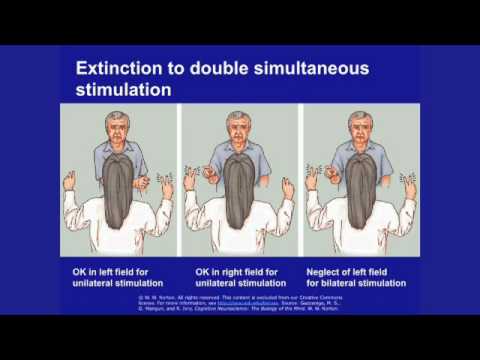
Blindsight is when a person reacts to something they cannot consciously see, because a hidden brain pathway still picks it up. Hemispatial neglect is when a person acts as if one whole side of the world does not exist after a stroke. In cognitive psychology, blindsight works through the superior colliculus, a pathway to the midbrain that survives damage to the visual cortex. Neglect and anosagnosia come from an imbalance in attention between the brain's two parietal cortices, often caused by right temporal lobe injury. Doctors and researchers use these conditions to show that conscious awareness and attention are built by the brain, not simply handed to us by the eyes. This matters when explaining stroke patients who ignore one side of their body, their plate, or a page, and who still process information they never consciously perceive.