Cybernetic Systems and Controls
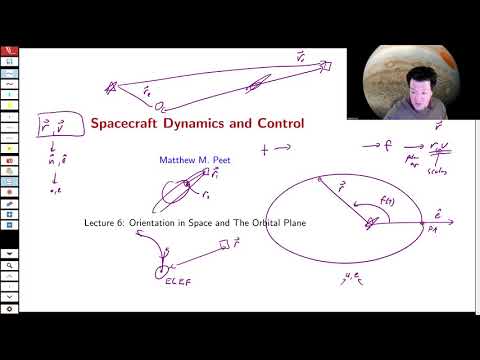
An inertial coordinate system in orbital mechanics is a fixed set of reference planes and vectors used to define a spacecraft's position and velocity in three dimensions, and it matters because a position vector is meaningless without knowing which frame it is measured in. It is used when pointing an antenna at a satellite, computing GPS coordinates, or converting an orbit's angular momentum and eccentricity vectors into three-dimensional orbital elements. The most common choice is the Earth-Centered Inertial (ECI) frame, built from the equatorial plane (perpendicular to Earth's rotation axis, giving the z-hat direction) and the vernal equinox direction, called the first point of Aries, which is the x-hat direction where the equatorial and ecliptic planes intersect.