Lecturio Medical
4 minutes
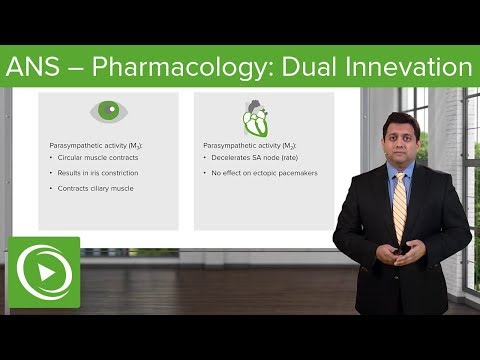
Organs such as the iris and the sinoatrial node receive dual autonomic innervation, with sympathetic activity (via alpha/beta receptors) and parasympathetic activity (via muscarinic receptors) producing opposing physiological effects, and the two systems' resting balance is dominated by parasympathetic (vagal) tone in both structures. This principle of reciprocal, dually-innervated autonomic control, mediated by distinct neurotransmitter systems synthesized at cholinergic and noradrenergic nerve terminals, is a core organizing concept in autonomic pharmacology.