Real Science
16 minutes
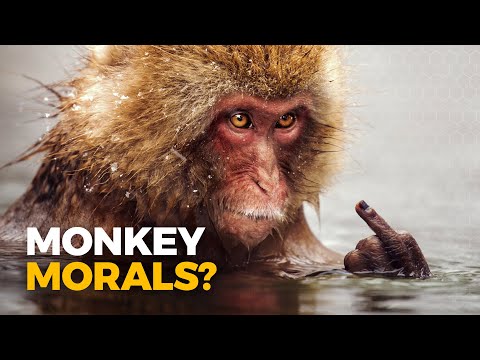
Comparative behavioral biology asks whether precursors of morality (fairness, empathy, punishment, forgiveness, self-awareness, theory of mind) exist in nonhuman primates, where morality is defined as what a society deems right and acceptable, enabling cooperation by sometimes sacrificing short-term self-interest. Experiments show primates exhibit inequity aversion, context-dependent prosocial choice, empathy-like responses, spiteful punishment, and reconciliation, which suggests moral behavior has deep evolutionary and neural roots. Whether this counts as true morality remains unresolved because it depends on deliberate choice and on understanding that others hold separate beliefs.