Marginal Revolution University
3 minutes
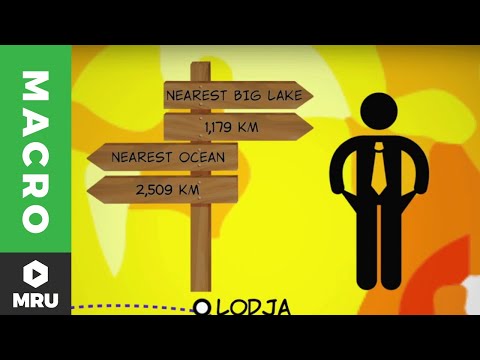
The core principle posits that access to navigable waterways functions as a natural determinant for economic growth by minimizing transaction costs associated with trade transport. This mechanism, rooted in the theory of Comparative Advantage and Location Theory, establishes that reduced logistical barriers incentivize market specialization and innovation across civilization domains. Consequently, geographic constraints such as landlocked status act as equivalent to "natural tariffs," imposing systemic impediments on GDP density relative to coastal or riverine regions within international trade economics.