Lecturio Medical
7 minutes
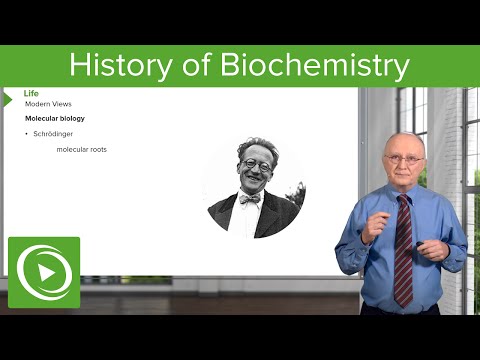
The historical development of biochemistry traces the shift from vitalism—the belief that living processes are fundamentally distinct from and irreproducible by ordinary chemistry—to the recognition that life operates through the same physical and chemical laws as the rest of the universe, culminating in the understanding that life has a molecular basis. This progression is tied to technological and conceptual advances establishing the cell as the basic unit of life, the identification of nucleic acids and heritable traits as carriers of genetic information, and the discovery of DNA's structure, which established how genetic information is replicated and transferred. These developments underlie the central dogma of molecular biology (DNA to RNA to protein), which describes the flow of genetic information in cells and remains foundational across genomics, transcriptomics, and metabolomics.