Harvard Science Book Talks and Research Lectures
71 minutes
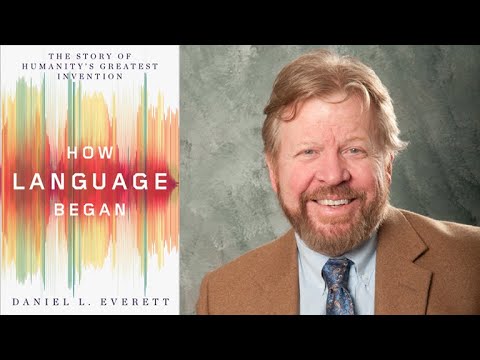
This lecture, grounded in linguistic anthropology and semiotics, argues that language should be defined not as recursive grammar but as the transfer of information via open-ended, conventional symbols, distinguished from icons (resemblance-based signs) and indexes (physically-connected signs) per Peircean semiotic theory. It proposes that the cognitive and cultural preconditions for symbolic communication arose gradually over evolutionary time in Homo erectus, long before Homo sapiens, evidenced by tool complexity, culture, and biology rather than by speech or grammar alone. The theory situates language origins within a biocultural, interdisciplinary framework spanning archaeology, semiotics, comparative biology, and cognitive science.