Dr Germán Rosas-Acosta
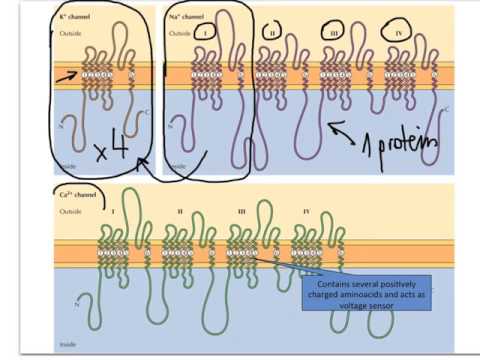
Transport of molecules across the plasma membrane follows distinct rules depending on molecular size, polarity, and charge: gases, small hydrophobic molecules, and small polar molecules diffuse freely, whereas larger polar molecules, amino acids, sugars, and ions require facilitated diffusion through carrier proteins (conformational, saturable, non-energy-requiring transport down a concentration gradient) or channel proteins (rapid, highly selective, gated pores). Ion channels exhibit selectivity based on pore diameter and coordinating chemical groups, are gated by voltage or by ligand binding, and their coordinated, sequential opening and closing across the plasma membrane generates and propagates the action potential, the electrical basis of neuronal signaling. This is cell biology/neurophysiology theory concerning membrane transport mechanisms, linking molecular transporter and channel structure to the physiological phenomenon of electrical excitability and synaptic transmission within the broader discipline of cell and neuro-biology.