YaleCourses
49 minutes
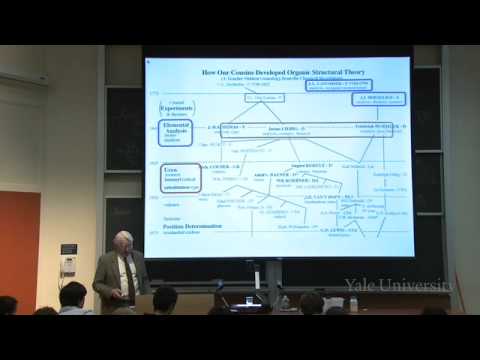
Isomerism is the phenomenon in which two or more substances share identical elemental composition and molecular weight yet exhibit distinctly different chemical properties, demonstrating that elemental analysis alone cannot fully characterize a compound — something about the arrangement of atoms must also matter. This concept, discovered via Wöhler's synthesis of urea from ammonium cyanate and Berzelius's study of tartaric/racemic acid, belongs to the history of structural organic chemistry and directly motivated the later development of atomic arrangement/structure theory (composition, constitution, configuration, conformation).