Dr Germán Rosas-Acosta
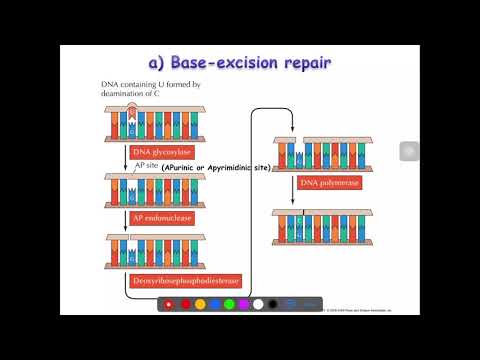
DNA is continuously damaged by intrinsic chemical instability (deamination, depurination/depyrimidination) and environmental agents (UV, ionizing radiation), and cells maintain genome integrity through four distinct repair mechanism classes — direct reversal, excision repair, translesion synthesis, and recombinational repair — each matched to a specific lesion type and repair fidelity/efficiency tradeoff. This belongs to molecular cell biology/molecular genetics, relating DNA repair to genome stability, mutagenesis, and human disease (cancer predisposition syndromes arising from specific pathway defects), and to the broader principle that redundant strand information (an intact complementary strand or homologous sequence) is the basis for error-free repair.