Swati Sharma
8 minutes
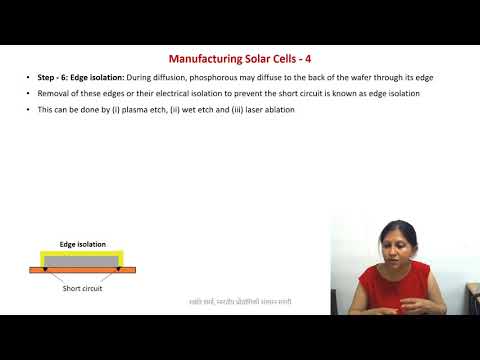
Phosphosilicate glass removal is the clean-up that follows phosphorus diffusion. The furnace leaves a thin glassy film on each wafer. It is silicon dioxide mixed with phosphorus, called PSG. The glass blocks good contacts and coatings, so it has to go. A short dip in dilute HF dissolves it, just as HF dissolves any silicon oxide. There is a second problem. Phosphorus also spreads around the wafer edges and onto the back. That wrapped n-layer links the front to the back, so current leaks around the edge like a short circuit. Edge isolation breaks that link. Most lines now float the wafer on an acid bath so only the back and edges are etched. The bath mixes HF with nitric acid, which oxidizes silicon so HF can dissolve it. Older lines cut a groove with a laser instead. The wet route uses more acid. It gives off nitrogen oxides, or NOx, and leaves fluoride and nitrate in the rinse water. Factories scrub the NOx and treat the water with lime to drop the fluoride out as a solid. The trade-off is clear: a laser uses no acid but wastes some cell area. After this Concept you can explain why a leaky edge lowers cell power and trace where this step's fluoride waste goes.