Data with Baraa
8 minutes
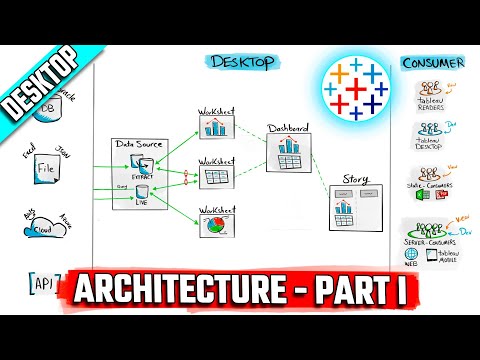
Tableau Desktop architecture operates on a four-layered theoretical framework consisting of Source, Tableau Desktop (Desktop), Server/Cloud, and Consumer layers, which facilitates the transformation of raw data into interactive visual narratives through structured abstraction hierarchies. The system defines distinct formal roles for data extraction versus live connections within sources, organizes visualization outputs into hierarchical levels ranging from worksheets to dashboards and stories via combinatorial logic such as blending and aggregation, and categorizes consumer interactions based on client capabilities including packaged workbooks (TWB), server-publishing models, static exports, and mobile viewing restrictions. This structural taxonomy belongs to the domain of Business Intelligence software architecture, where it serves as a mechanism for decoupling data management from visualization consumption while standardizing access control and distribution protocols within enterprise analytics environments.