Dr Germán Rosas-Acosta
3 minutes
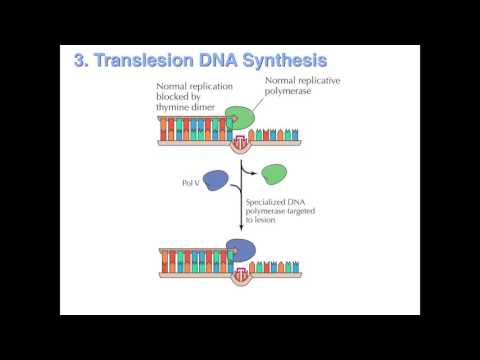
Translesion DNA synthesis is a damage-tolerance mechanism, not a repair mechanism: it allows DNA replication to continue past a blocking lesion (such as a thymine dimer) by substituting the stalled, high-fidelity replicative polymerase with a specialized, low-processivity polymerase capable of synthesizing across the damaged template, after which the high-fidelity polymerase resumes synthesis and excision repair later corrects both the original lesion and any errors introduced during bypass. This belongs to molecular biology/molecular genetics, specifically the DNA damage response, and relates to DNA replication (polymerase processivity, replication fork progression) and excision repair as the mechanism that ultimately restores an error-free sequence.