Josh Yankell
4 minutes
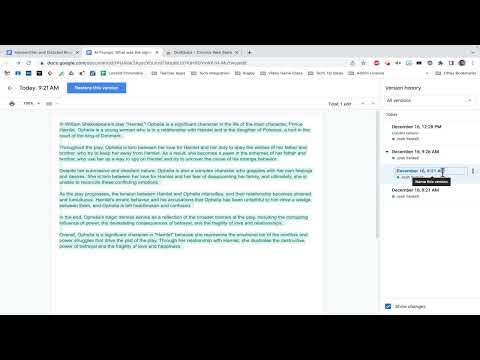
If you cannot reliably tell a finished text's author from the text, assess something a finished text does not contain: the process that produced it. In practice this means a task that collects evidence as it goes -- an outline handed in before the draft, a document's revision history, an annotated bibliography with the student's own notes on each source, a marked-up second draft responding to specific feedback, a short reflection on what changed and why. Reviews of assessment strategies in AI-affected classrooms converge on this family of designs -- scaffolded, staged, process-visible work -- as the main structural response, alongside supervised and oral components. Be honest about the evidence: these are recommendations synthesised from practice and expert review, not randomised trials showing reduced misconduct, and a determined student can generate a plausible draft history too. What process-visible design reliably does is change the economics and the information available. Producing a coherent trail of decisions costs more than producing one polished artefact, and if a question later arises, you hold specific, dated material about this student's work rather than a probability score about the text. That is also why this is the evidence a detector cannot give you. You can now convert one existing assignment into two or three staged submissions and name what each stage would show you.