nptelhrd
58 minutes
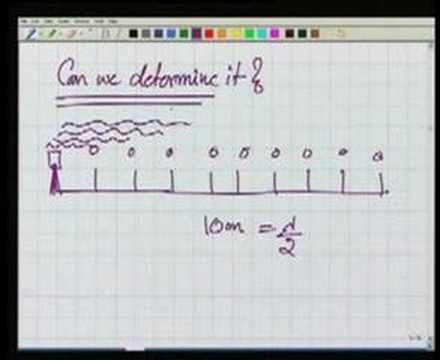
In Electronic Distance Measurement (EDM), the phase-difference method computes distance from the phase shift between an outgoing and returning modulated wave, using an instrument constant (K1) and target constant (K2); systematic deviations from the true distance are classified into three error types tied to distinct physical causes: zero error, a constant-magnitude, direction-invariant offset arising when the instrument's actual K1/K2 values drift from their nominal calibrated values; cyclic error, a bounded, distance-periodic error (confined within one half-wavelength) caused by inaccuracies in phase-difference measurement, from either external signal interference or non-linear graduation of the phase-measuring scale; and scale error, an error that grows linearly with distance because the instrument's actual modulation frequency (and thus actual wavelength) diverges from its assumed nominal wavelength. This theory belongs to the domain of surveying, specifically instrumental error analysis for distance-measuring equipment, and it grounds the standard vendor accuracy specification of EDM instruments as a two-term expression (a constant term "a" representing instrument/phase error, plus a distance-proportional term "b" in parts-per-million), which in turn determines an instrument's relative accuracy compared to alternative measurement methods.