Estimated Time to Complete
Only available after login
What You'll Learn
Concepts:
Distinguishing Intensive and Extensive Properties in Chemistry
Monoatomic and Polyatomic Ion Classification
Cation and Anion Formation from Metals and Nonmetals
Calculating Average Atomic Mass from Isotopic Abundance
Rutherford Gold-Foil Scattering Experiment: Apparatus and Detection Setup
Distinguishing Homogeneous and Heterogeneous Mixtures by Phase Uniformity
Average Atomic Mass and Isotopic Abundance Calculations
Writing Net Ionic Equations for Precipitation Reactions
Balancing Chemical Equations
Relative Molecular Mass Calculation from Atomic Weights
Chemical Element Symbols and IUPAC Notation Rules
Types of Matter: Elements, Compounds, Mixtures, and Pure Substances
Scientific Notation Conversion and Representation
Rutherford's Gold-Foil Alpha Scattering Experiment
Predicting Products of Single Replacement Reactions
Oxidation States in Inorganic Chemistry
Density, Buoyancy, and Archimedes Principle: Determining Volume by Displacement
Greek Alphabet Symbols in Mathematics, Physics, and Chemistry Notation
Covalent vs Ionic Character Differences
Distinguishing Strong and Weak Electrolytes by Dissociation Extent
Deriving Covalent Compound Formulas from Greek-Prefix Names
Gas Evolution Reactions of Carbonates with Acids
Accuracy vs Precision
Cathode Ray Discharge Tube Experiments and the Discovery of the Electron
Precision vs. Accuracy
Concentration Calculations by Mass or Volume
Calculating Theoretical and Percent Yield Using Stoichiometry
Combustion Analysis to Determine Empirical and Molecular Formulas
Finding Molecular Formula from Percent Composition and Molecular Mass
Law of Definite Proportions
Calculating Ionic Charge from Proton and Electron Counts
Determining Hydrate Formulas and Hydration Numbers from Mass Data
Mole Concept and Avogadro's Number Application
Scientific Notation: Conversion, Normalization, and Arithmetic Operations
Predicting Products of Chemical Reactions by Reaction Type
Solving Mixture Problems with Weighted Average Concentration Equations
Metal Reactivity Series
Naming Covalent Molecular Compounds Using Greek Prefixes
Pure Substances vs Mixtures: Physical vs Chemical Separation Criteria
Organic Polyatomic Ions and Resonance Structures
Calculating Percent Error from Measured and Actual Values
Atomic Mass Definitions
Rounding to a Target Number of Significant Figures Using Scientific Notation
Isotopes and Atomic Symbol Notation
Solubility Rules for Ionic Compounds in Water
Electron Transfer Reactions in Redox Chemistry
Naming Acids Using Ion Suffix Rules
Metric System Conversion Factors Using Dimensional Analysis
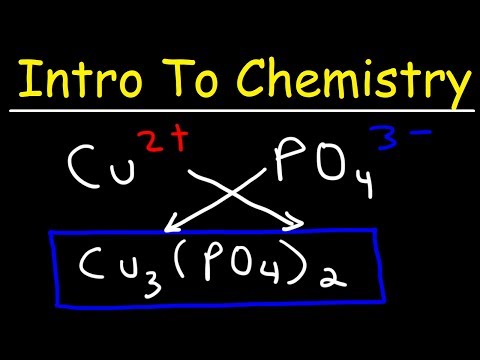
Writing Ionic Compound Formulas Using the Crisscross Method
Integrals in Calculus
Absolute Temperature Scale (Kelvin)
Identifying the Limiting Reactant Using Mole-to-Coefficient Ratios
Converting Between Grams and Milligrams Using Dimensional Analysis
Predicting Single Replacement Reactions with the Activity Series
Atomic Structure Basics
Dalton's Atomic Theory
Diatomic Elements and Their Lewis Structures
Calculating Excess Reactant Mass Remaining After a Reaction
Classification of Chemical Reactions: Combination, Decomposition, Displacement, and Double Displacement
Distinguishing Chemical Changes from Physical Changes
Organic Chemistry Review on Patreon
Law of Conservation of Mass
Chemical Equation Balancing Techniques for Redox Reactions
Law of Definite Proportions in Chemical Compounds
Periodic Table Grouping
Mass Percent Composition Calculations
Theoretical and Percent Yield in Combustion Stoichiometry
Acid-Base Titration Calculations Using Solution Stoichiometry
Writing Balanced and Net Ionic Equations for Acid-Base Neutralization
Aqueous Dissolution and Electrolyte Classification
Physical and Chemical Properties in Chemistry
Naming Binary and Polyatomic Ionic Compounds Including Transition Metals
Periodic Table Grouping Logic in General Chemistry
Significant Figures: Determination Rules and Precision Propagation in Rounding
Plasma as the Fourth State of Matter: Ionization via Thermal or Electrical Energy
Oxidation States
Mole Concept and Stoichiometric Calculations
Ionic vs Covalent Compound Classification
What you will learn
About Dr. Theopolis
D
Guide profile coming soon.